

Eczema Treatment
for the Whole Family
Stop the itch. Calm the flare. Find lasting relief with personalized dermatology care.
Established 1973 • 3 locations • 5 MDs + 6 NPs + 2 PAs • BBB A+ • Board-certified by the American Board of Dermatology.
Eczema is more than just dry skin. It is an itchy, often uncomfortable, sometimes exhausting condition that can affect every part of daily life, from sleep to confidence. At Chattanooga Skin and Cancer Clinic, our board-certified dermatologists treat eczema in infants, children, teens, and adults across all three of our offices. We help you understand what triggers your flares, calm the skin in front of us today, and build a long-term plan that keeps eczema under control.
Learn ABOUT ECZEMA
What
Is Eczema?
Eczema, also called atopic dermatitis, is a chronic skin condition that causes inflamed, itchy, dry, and irritated skin. It is often part of what dermatologists call the “atopic triad,” meaning patients with eczema are also more likely to have asthma and seasonal allergies.
Eczema commonly begins in childhood, often within the first year of life, but it can also appear for the first time in adulthood. Many children outgrow eczema, while others manage it throughout their lives. The good news is that with the right care, almost everyone can find relief.
Eczema is not contagious. It is not caused by something you did or did not do. It is a condition driven by skin barrier dysfunction and immune system overactivity, and it responds well to treatment.
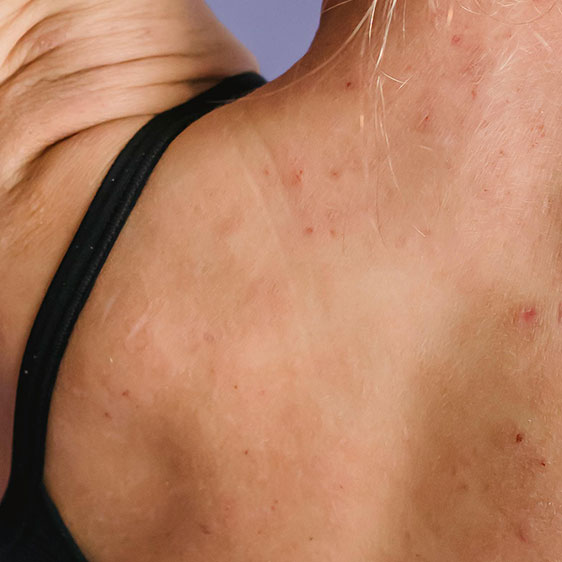
Common Signs of Eczema
Eczema looks and feels different at different ages,
but the most common signs include:
- Intense itching, often the first symptom
- Dry, sensitive, easily irritated skin
- Red or brownish-gray patches (especially on hands, feet, ankles, wrists, neck, upper chest, eyelids, inside elbows, and behind knees)
- Small, raised bumps that may ooze or crust when scratched
- Thickened, cracked, or scaly skin from repeated scratching
- Raw, sensitive, swollen skin from scratching
- In infants, often appears on the cheeks, scalp, or torso
- In adults, often appears in the creases of elbows, knees, and on the hands
What Triggers Eczema Flares?
Eczema flares are usually triggered by a mix of internal and external factors. Identifying your triggers is one of the most important parts of long-term control.
- Dry air and changes in temperature or humidity
- Soaps, detergents, fragrances, and certain skincare products
- Wool, polyester, and other rough or synthetic fabrics
- Sweat and heat
- Allergens like pollen, pet dander, dust mites, and mold
- Stress and lack of sleep
- Certain foods (especially in young children)
- Skin infections (bacterial, viral, or fungal)
- Hormonal changes
EXPERT CARE
How We Treat Eczema
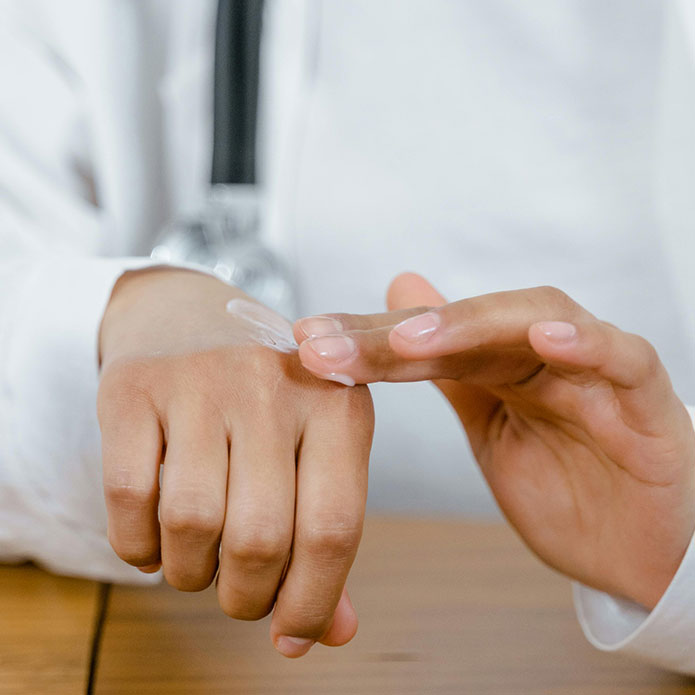
Eczema treatment is built around two goals: calming flares quickly and keeping the skin barrier healthy long-term. Your plan may include:
Daily moisturizing routine
Thick, fragrance-free creams or ointments applied multiple times a day. The single most important habit for keeping eczema under control.
Topical corticosteroids
Used short-term to bring active flares under control quickly.
Non-steroidal topicals
Including calcineurin inhibitors and newer options for sensitive areas like the face and eyelids, or for long-term maintenance.
Trigger identification
We help you figure out what is setting off your flares and create a practical plan to avoid those triggers.
Wet wrap therapy
For severe flares, especially in children. Highly effective when applied correctly.
Phototherapy
Light therapy can be very effective for moderate to severe eczema. Available at our Chattanooga and Cleveland offices.
Systemic treatments
Including newer biologic medications and JAK inhibitors that have transformed the outlook for moderate to severe eczema in recent years.
Frequently asked Questions
Many children outgrow eczema by adolescence, especially when treatment starts early and triggers are well-managed. About half of children with severe eczema continue to have some symptoms into adulthood, but they are usually milder and easier to control.
No. Eczema is not contagious. You cannot catch it from someone else, and you cannot give it to others. Children with eczema are safe to attend school and daycare.
Thick, fragrance-free creams and ointments work better than thin lotions. Look for products labeled for sensitive skin or eczema. Apply within three minutes of bathing while skin is still damp. Your dermatologist can recommend specific products at your visit.
Yes. Skin damaged by eczema is more vulnerable to bacterial, viral, and fungal infections. If your eczema is suddenly oozing, crusting yellow, or getting much worse, call us. Infections need prompt treatment.
For some patients, especially young children, certain foods can trigger flares. For most adults, food is not the main driver. We do not recommend cutting out foods unless there is clear evidence they are causing problems for you specifically.
Ready for Real
Eczema Relief?
Modern eczema treatment is more effective than ever. Schedule a visit at your nearest location and let us help you find lasting relief.