
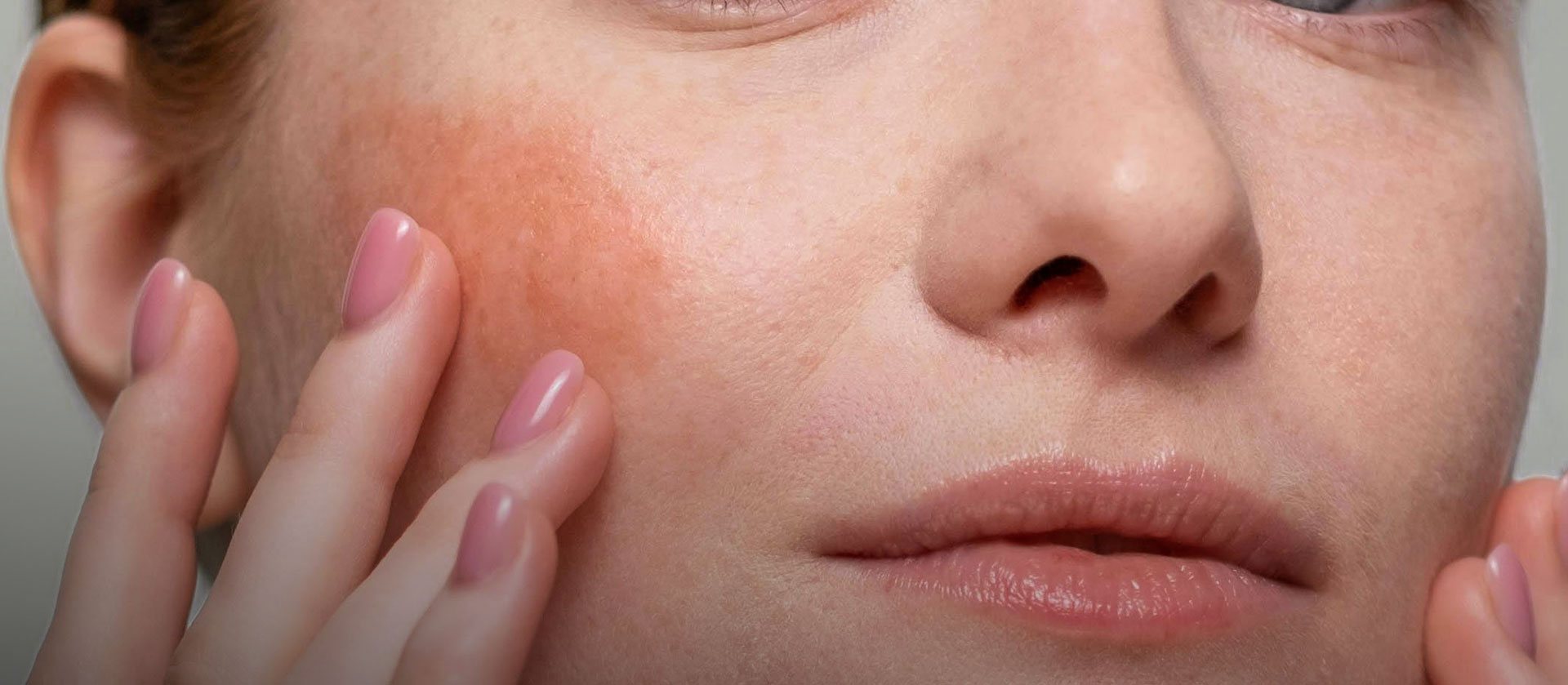
Rosacea Treatment
That Calms the Redness
Personalized care to manage flushing, bumps, and visible blood vessels for the long term.
Established 1973 • 3 locations • 5 MDs + 6 NPs + 2 PAs • BBB A+ • Board-certified by the American Board of Dermatology.
Rosacea is one of the most under-treated skin conditions in the United States. An estimated 14 million Americans have it, but many never see a dermatologist because they assume the redness, flushing, or breakouts are just sensitive skin. They are not. Rosacea is a chronic, treatable condition, and the right plan can dramatically reduce symptoms and prevent it from getting worse over time. At Chattanooga Skin and Cancer Clinic, our board-certified dermatologists help patients across the Tennessee Valley take back control of rosacea.
Learn ABOUT ECZEMA
What
Is Rosacea?
Rosacea is a chronic inflammatory skin condition that primarily affects the face. It causes persistent redness, visible blood vessels, flushing, and sometimes acne-like bumps. Without treatment, rosacea tends to gradually worsen over the years.
Rosacea most often appears on the cheeks, nose, chin, and forehead, but can also affect the eyes (called ocular rosacea). It is most common in adults over 30, particularly those with fair skin, but it can affect people of all skin tones.
Rosacea is not the same as acne, although the two can look similar and even occur together. Treating rosacea like acne (with harsh products) can actually make it worse. That is one of the most important reasons to see a dermatologist for an accurate diagnosis.
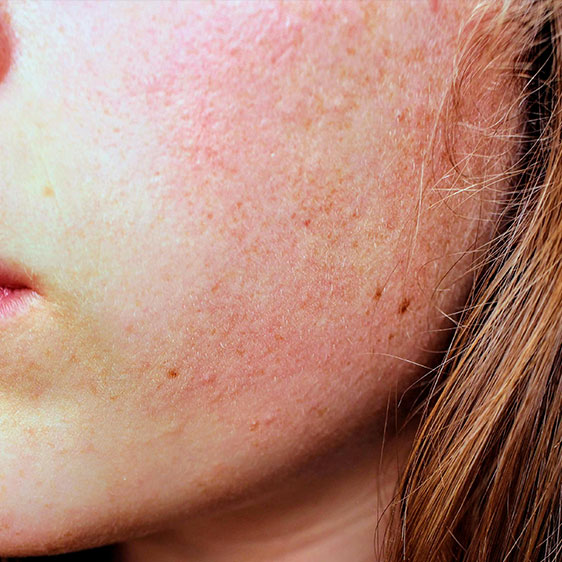
Common Signs of Rosacea
Rosacea presents differently from person to person.
Common signs include:
- Persistent facial redness, especially on the cheeks, nose, chin, and forehead
- Frequent flushing or blushing
- Visible small blood vessels (telangiectasias)
- Acne-like bumps and pimples (papules and pustules)
- Skin that feels hot, burning, or stinging
- Dry, rough, or scaly facial skin
- Swollen, red eyes; gritty or burning sensation (ocular rosacea)
- Thickened skin, especially on the nose (rhinophyma, in advanced cases)
Common
Rosacea Triggers
Rosacea has no single cause, but most patients have triggers that bring on flares. Identifying your triggers is one of the most important parts of long-term management.
- Sun exposure
- Heat and hot weather
- Spicy foods
- Hot drinks (coffee, tea, hot chocolate)
- Alcohol, especially red wine
- Stress and strong emotions
- Vigorous exercise
- Cold wind
- Certain skincare products, especially those with alcohol or fragrance
- Some medications, including topical steroids and certain blood pressure medications
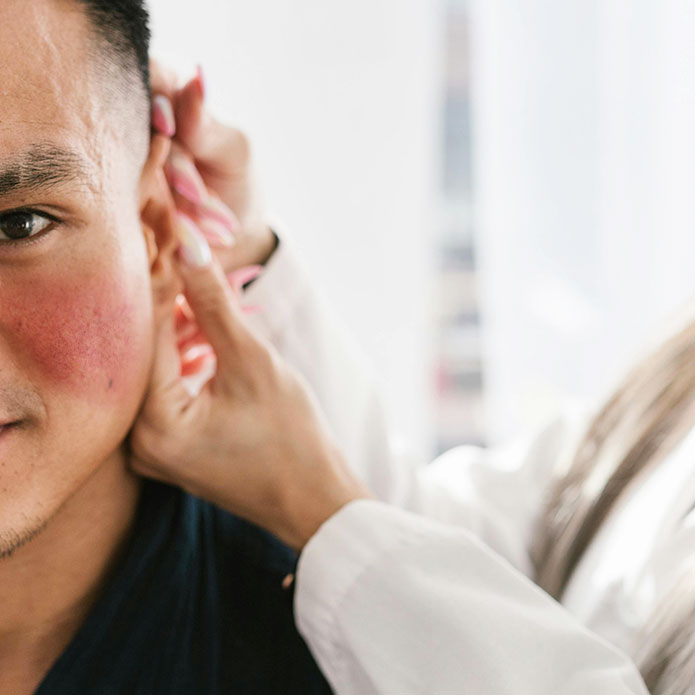
EXPERT CARE
How We Treat Rosacea
Rosacea treatment is highly personalized. Most patients do best with a combination of trigger management, gentle skincare, and targeted treatments. Options include:
Topical medications
Including metronidazole, ivermectin, and azelaic acid for redness and bumps. Newer topicals can dramatically reduce visible flushing within hours.
Oral antibiotics
Low-dose doxycycline is highly effective for inflammatory rosacea and is well tolerated long-term.
Laser and light treatments
For visible blood vessels and persistent redness that does not respond to topical treatment alone.
Skincare guidance
Personalized recommendations on cleansers, moisturizers, and sunscreens that calm rosacea instead of triggering it.
Trigger identification
We help you build a personal trigger list and a practical plan to avoid the worst offenders.
Ocular rosacea care
Coordinated treatment with eye drops and oral medications when rosacea affects the eyes.
Frequently asked Questions
There is no cure for rosacea, but it can be controlled extremely well with the right treatment plan. Most patients see significant improvement within weeks of starting treatment, and ongoing care keeps symptoms at bay.
No. Rosacea and adult acne can look similar, and they sometimes occur together, but they are different conditions with different treatments. Using acne products on rosacea can make it much worse. An accurate diagnosis from a dermatologist is the first step.
Gentle, simple, and consistent. A non-foaming, fragrance-free cleanser, a calming moisturizer, and broad-spectrum mineral sunscreen every single day. Avoid hot water, scrubs, alcohol-based products, and anything labeled “detoxifying” or “clarifying.” Your dermatologist can recommend specific products at your visit.
Yes, significantly. Sun exposure is the single most common rosacea trigger. Daily broad-spectrum mineral sunscreen (SPF 30 or higher) is one of the most effective things you can do to control rosacea long-term.
Yes. Although rosacea is more common in women, men often have more severe cases and are more likely to develop rhinophyma (thickening of the nose). Men are encouraged to seek treatment early to prevent progression.
Ready to Calm the
Redness?
Modern rosacea treatment is more effective than ever. Schedule a visit at your nearest location and let us help you take control.