

Age spots vs skin cancer can be challenging to distinguish. After a certain age, brown spots start appearing in places that get the most sun — the backs of the hands, the forearms, the face, the shoulders. For most people, these spots accumulate gradually over years, and they become so familiar that it is easy to stop paying attention to them. They are just part of getting older, right?
In most cases, yes. The majority of flat, brown spots that develop with age are harmless. They are called solar lentigines, commonly known as age spots, sun spots, or liver spots, and they are a direct result of cumulative sun exposure over a lifetime. But not every brown spot is benign, and the challenge is that early skin cancer can look remarkably similar to a harmless age spot, especially to an untrained eye.
What Are Age Spots?
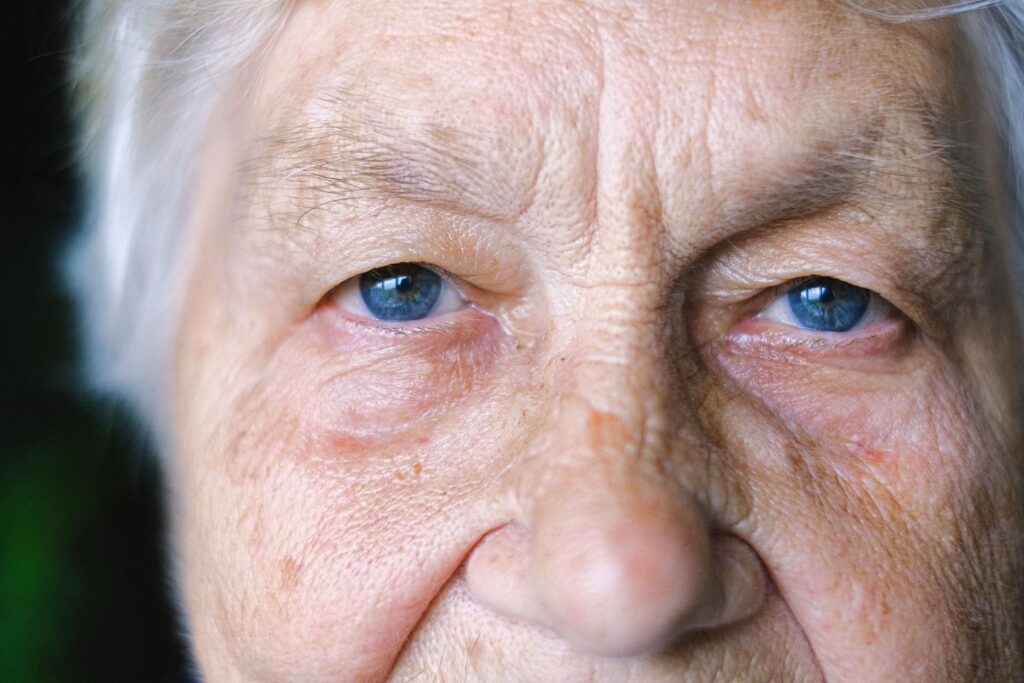
Age spots are flat, oval patches of increased pigmentation that develop on areas of skin that have had the most sun exposure over the years. They range in color from light tan to dark brown, and they can be as small as a freckle or larger than a dime. The face, the backs of the hands, the tops of the forearms, the upper back, and the shoulders are the most common locations.
Despite the name, age spots are caused by sun exposure rather than by aging itself. The ultraviolet radiation in sunlight stimulates melanocytes, the cells that produce skin pigment, to produce more melanin. Over time, certain areas accumulate more melanin than others, creating the visible spots. Fair-skinned individuals and people who spent significant time outdoors without sun protection tend to develop more of them, and they generally become more numerous and more prominent after age 40.
Age spots are not dangerous. They do not require treatment for medical reasons. Some people choose to have them lightened or removed for cosmetic purposes, but from a health perspective, a true age spot is simply a marker of past sun exposure.
When a Brown Spot May Not Be an Age Spot
The concern with brown spots is not the spots themselves — it is the possibility that what looks like an age spot is actually something else. Several types of skin cancer can present as flat, brown, or darkly pigmented patches that resemble benign sun damage, particularly in their early stages.
Melanoma, the most serious form of skin cancer, can appear as a new dark spot or as a change in an existing one. Lentigo maligna, a subtype of melanoma, is especially easy to confuse with an age spot because it develops slowly as a flat, irregularly colored patch on sun-exposed skin in older adults. Without a trained evaluation, it can be mistaken for a benign age spot for months or years.
Basal cell carcinoma and squamous cell carcinoma, the two most common types of skin cancer, can also appear as flat, discolored patches, particularly the superficial subtypes. These may present as pinkish-brown or reddish-brown areas that do not heal or that change slowly over time.
Actinic keratoses, which are precancerous lesions caused by sun damage, can also develop in the same areas where age spots appear. They are typically rough or scaly to the touch rather than smooth, and they represent an early stage of sun damage that has the potential to progress to squamous cell carcinoma if left untreated.
How to Evaluate Your Spots at Home
While self-examination is not a substitute for a professional evaluation, there are characteristics that can help you decide whether a spot warrants a closer look. Age spots tend to be uniform in color, have clear and regular borders, and remain stable over time. They are flat, not raised, and they do not itch, bleed, or change.
Features that are more concerning include a spot that has multiple colors within it — brown mixed with black, red, or white areas. Borders that are irregular, jagged, or poorly defined. A spot that is noticeably different from others nearby. A spot that is new and appeared recently in someone over 40. Any spot that is changing in size, shape, or color, even gradually. And any spot that itches, bleeds, crusts, or does not heal.
These features do not automatically mean a spot is cancerous. Many benign growths share some of these characteristics. But they do indicate that a professional evaluation is a good idea, because the earlier skin cancer is detected, the more treatment options are available and the better the outcomes tend to be.
Why a Dermatologist Evaluation Matters
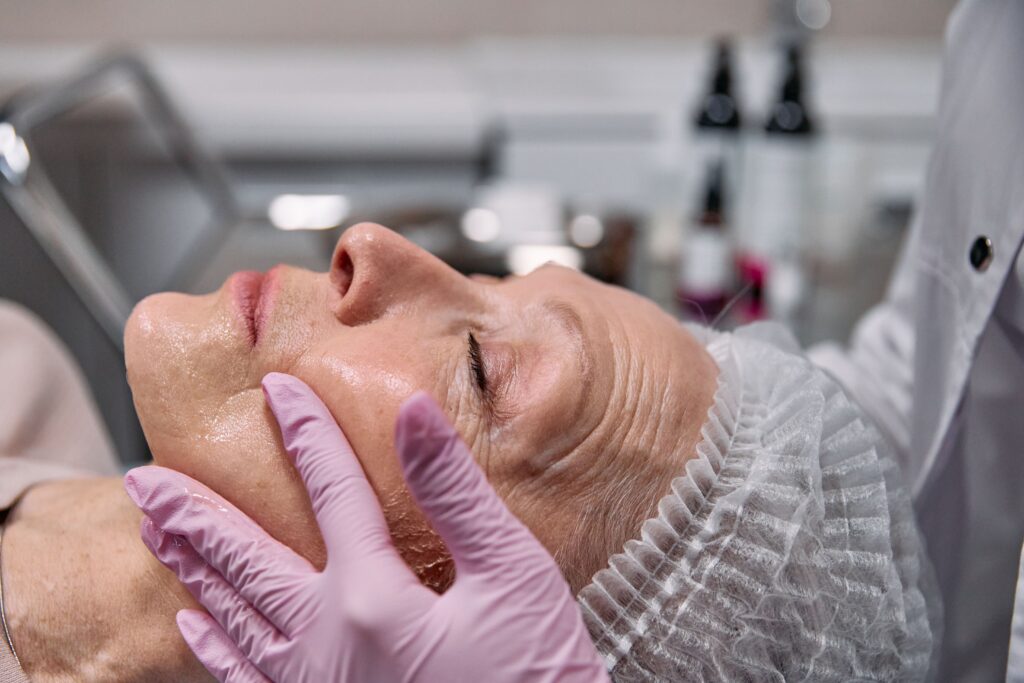
A board-certified dermatologist is trained to distinguish between the many types of pigmented spots that develop on the skin. During an evaluation, the dermatologist uses a dermatoscope — a specialized magnifying tool with polarized light — to see structures beneath the surface of the skin that are not visible to the naked eye. These structures help differentiate benign age spots from melanocytic lesions, precancerous changes, and early skin cancers.
If a spot looks suspicious, the dermatologist may recommend a biopsy, which involves taking a small sample of the tissue for laboratory analysis. A biopsy provides a definitive diagnosis and guides the next steps if treatment is needed. For spots that are confirmed to be benign age spots, no further action is required unless the patient wants them addressed for cosmetic reasons.
Regular skin checks are especially important for people with significant sun exposure history, fair skin, a large number of spots, or a personal or family history of skin cancer. A medical dermatology evaluation can give you a clear picture of which spots are harmless and which ones need monitoring or attention.
Schedule an Appointment in Kimball
Chattanooga Skin and Cancer Clinic has been providing expert dermatology care across the Tennessee Valley since 1973. If you have spots on your skin that you are not sure about, our board-certified dermatologists at the Kimball office can take a closer look and let you know where things stand.
Kimball Office
400 Dixie Lee Center Rd, Suite C, Kimball, TN 37347
Phone: 423-815-9975
Hours: Monday through Thursday, 8:00 AM to 4:00 PM (CST)
Follow us! @chattskinandcancer