
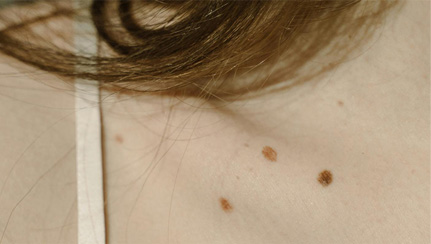
Basal cell carcinoma and squamous cell carcinoma are the two most common types of skin cancer, and while both are highly treatable when caught early, they develop from different cell types, look different on the skin, and can behave in very different ways. Basal cell carcinoma (BCC) starts in the basal cells at the bottom of the outer skin layer, tends to grow slowly, and rarely spreads to other parts of the body. Squamous cell carcinoma (SCC) starts in the squamous cells closer to the skin’s surface, can grow faster, and carries a slightly higher risk of spreading if left untreated. According to the Skin Cancer Foundation, more than 4 million cases of BCC and over 1.8 million cases of SCC are diagnosed in the United States each year. Knowing how to tell these two cancers apart, and understanding when to get checked, can make a real difference in outcomes. At Chattanooga Skin and Cancer Clinic, our board-certified dermatologists diagnose and treat both types every day across our Chattanooga, Cleveland, and Kimball offices.
How Do Basal Cell and Squamous Cell Carcinomas Develop Differently?
Basal cell carcinoma forms in the deepest part of the epidermis, the outer layer of your skin. These cells are constantly dividing to produce new skin cells that push older ones toward the surface. When DNA damage (usually from UV exposure) causes basal cells to grow out of control, a BCC forms. Because these tumors grow slowly and tend to stay local, they are sometimes described as “less aggressive.” That said, left alone, a BCC can grow deep into surrounding tissue, damaging nerves, cartilage, and even bone.
Squamous cell carcinoma originates higher up in the epidermis, in the flat cells that make up most of the skin’s outer surface. SCC often develops from precancerous spots called actinic keratoses, which are rough, scaly patches caused by years of sun exposure. While most SCCs stay localized, the risk of metastasis (spreading to lymph nodes or other organs) is higher than with BCC, particularly in tumors that are large, deep, or located on the ears, lips, or areas of chronic scarring.
I find that patients are often surprised to learn these two cancers start just millimeters apart in the same layer of skin, yet their behavior can be so different.
What Does Basal Cell Carcinoma Look Like on the Skin?
BCC shows up in several forms, which can make it tricky to spot if you don’t know what to look for. The most common type appears as a pearly or waxy bump, often on the face, ears, or neck. It might have visible blood vessels running through it and a slightly translucent quality, almost like a small blister that never quite goes away.
Other BCCs look like flat, flesh-colored or brown lesions on the chest or back. Some develop a central sore that crusts over, heals partially, then opens up again. This cycle of scabbing and reopening is one of the most reliable warning signs. A sore that refuses to fully heal within three to four weeks deserves a professional evaluation.
Less common variants include morpheaform BCC, which looks like a pale, waxy scar and can be harder to detect because it blends into surrounding skin. These tend to have less defined borders, which makes them more challenging to treat.
What Does Squamous Cell Carcinoma Look Like?
SCC tends to look rougher and more textured than BCC. A common presentation is a firm, red nodule, often on sun-exposed areas like the face, ears, neck, hands, or forearms. The surface may be scaly or crusted, and the lesion can feel tender to the touch.
Some SCCs appear as flat, reddish patches with an irregular border that slowly grow over time. Others develop into open sores that bleed or crust and don’t resolve on their own. On the lips, SCC can look like a persistent rough or cracked patch that doesn’t respond to lip balm or chapstick.
One thing to keep in mind: SCC can also develop in areas that don’t get much direct sun, including the genitals, inside the mouth, and on scars or chronic wounds. People with weakened immune systems, including organ transplant recipients, are at higher risk for these less typical presentations.
What Are the Main Risk Factors for Each Type?
UV exposure is the single biggest risk factor for both BCC and SCC. That includes natural sunlight and tanning beds. People with fair skin, light eyes, and a history of sunburns are at the highest risk, though skin cancer can develop in people of every skin tone.
For BCC specifically, intermittent intense sun exposure (think weekend sunburns or vacation burns) plays a bigger role. Childhood sunburns are especially relevant. BCC also tends to show up on areas with the most cumulative sun exposure, primarily the face, head, and neck.
SCC, on the other hand, is more closely tied to cumulative, long-term sun exposure. People who work outdoors or spend considerable time in the sun over decades have an elevated risk. Other SCC risk factors include a history of precancerous actinic keratoses, previous radiation therapy, chronic wounds, and immunosuppression.
Age is a factor for both types. Diagnoses become much more common after age 50, though dermatologists are increasingly seeing both BCC and SCC in younger patients, likely tied to tanning bed use and increased recreational UV exposure.
How Are Basal Cell and Squamous Cell Carcinomas Treated?
Treatment depends on the type, size, location, and depth of the cancer. For small, superficial BCCs, options include surgical excision (cutting out the tumor with a margin of healthy tissue), curettage and electrodesiccation (scraping the tumor and using an electric needle to destroy remaining cells), or topical medications like imiquimod or fluorouracil that stimulate the immune system to attack abnormal cells.
For larger or more complex BCCs, and for most SCCs, Mohs micrographic surgery is considered the gold standard. During Mohs surgery, the surgeon removes thin layers of tissue one at a time, examining each layer under a microscope immediately. This process continues until no cancer cells remain. Mohs offers the highest cure rate (up to 99% for primary BCCs and up to 97% for primary SCCs, according to the American College of Mohs Surgery) while preserving as much healthy tissue as possible.
At Chattanooga Skin and Cancer Clinic, we perform Mohs surgery at both our Chattanooga and Cleveland locations. For patients at our Kimball office, we coordinate referrals to one of these locations when Mohs is the best option.
SCC that has spread past the skin may require additional treatments such as radiation therapy, systemic chemotherapy, or immunotherapy. These cases are less common, but they reinforce why early detection matters so much.
Why Does Early Detection Make Such a Big Difference?
When caught early, both BCC and SCC have excellent prognosis. A BCC removed in its early stages almost never comes back and almost never spreads. The same is true for most early-stage SCCs. The trouble starts when people wait.
A BCC that grows unchecked for years can invade bone and cartilage, requiring complex reconstructive surgery. An SCC that isn’t addressed can metastasize, and metastatic SCC has a five-year survival rate of about 34%, according to the American Cancer Society. That’s a sharp contrast from the nearly 100% cure rate when it’s caught and treated locally.
The takeaway is simple: if something on your skin is new, changing, or not healing, get it looked at. A 15-minute skin check could save you from a far more complicated treatment down the road.
How Can You Reduce Your Risk of Both Types of Skin Cancer?
Sun protection is the most effective prevention strategy for both BCC and SCC. That means broad-spectrum sunscreen with SPF 30 or higher applied every two hours when outdoors, protective clothing (hats, long sleeves, UV-blocking sunglasses), and seeking shade during peak UV hours between 10 a.m. and 4 p.m. Tanning beds should be avoided entirely. The World Health Organization classifies UV-emitting tanning devices as Group 1 carcinogens, the same category as tobacco.
Regular skin self-exams help you spot changes early. Once a month, check your entire body in a well-lit room with a full-length mirror. Use a hand mirror for hard-to-see areas like your back, scalp, and the soles of your feet. If you notice anything new or different, a firm bump, a scaly patch, a sore that won’t heal, schedule an appointment.
Annual professional skin exams are also a smart habit, especially if you have a personal or family history of skin cancer, fair skin, a history of extensive sun exposure, or a large number of moles. Our dermatologists at Chattanooga Skin and Cancer Clinic perform thorough head-to-toe screenings designed to catch problems before they become serious.
Frequently Asked Questions About Basal Cell and Squamous Cell Carcinoma
Can basal cell or squamous cell carcinoma be fatal?
BCC is almost never fatal. It grows slowly and very rarely spreads past the original site. SCC carries a low but real risk of metastasis, particularly when left untreated for a long time or when it occurs in immunocompromised patients. Early treatment for both types is nearly always curative.
Can basal cell or squamous cell carcinoma be fatal?
BCC is almost never fatal. It grows slowly and very rarely spreads past the original site. SCC carries a low but real risk of metastasis, particularly when left untreated for a long time or when it occurs in immunocompromised patients. Early treatment for both types is nearly always curative.
What is Mohs surgery and when is it recommended?
Mohs micrographic surgery removes skin cancer one layer at a time, with each layer examined under a microscope before the next is removed. It’s recommended for cancers in cosmetically or functionally sensitive areas (face, ears, hands), for large or recurrent tumors, and for aggressive subtypes. It offers the highest cure rates with the smallest possible wound.
Where can I get a skin cancer screening near Chattanooga?
Chattanooga Skin and Cancer Clinic provides full-body skin cancer screenings at all three locations: Chattanooga (6061 Shallowford Road), Cleveland (3891 Adkisson Drive), and Kimball (400 Dixie Lee Center Rd). Appointments are available Monday through Friday. Call 423-899-2700 for the Chattanooga office, 423-479-8648 for Cleveland, or 423-815-9975 for Kimball.