
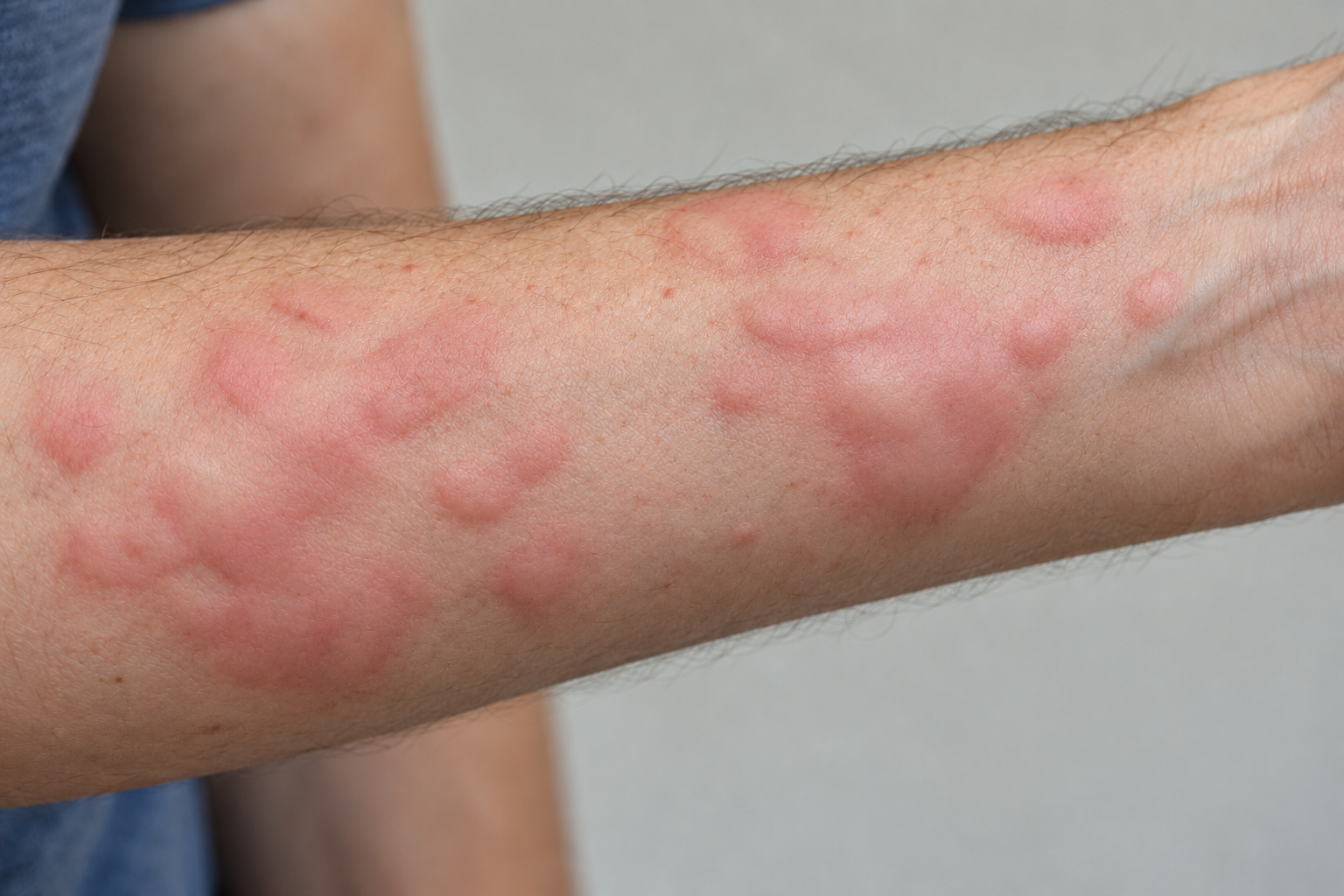
You wake up one morning and there are raised, itchy welts across your stomach. By the afternoon, those welts have faded, but new ones have appeared on your arms. The next day the pattern shifts again. You have not changed your laundry detergent, you do not have a known food allergy, and you cannot figure out what caused it. All you know is that your skin is covered in bumps that itch intensely and will not stay in one place.
That is how hives typically present, and it is one of the most common and most confusing skin conditions patients bring to a dermatologist. Hives affect roughly 20 percent of the population at some point in their lives, and while a single episode is usually harmless and short-lived, recurring or long-lasting hives can significantly affect quality of life.
What Are Hives?
Hives, known medically as urticaria, are raised, itchy welts that appear on the skin when the body releases histamine and other chemicals into the bloodstream. The welts can be small or large, round or irregularly shaped, and they can appear anywhere on the body. One of the defining features of hives is that individual welts rarely last more than 24 hours. They appear, itch, and then fade, often only to be replaced by new welts in a different location.
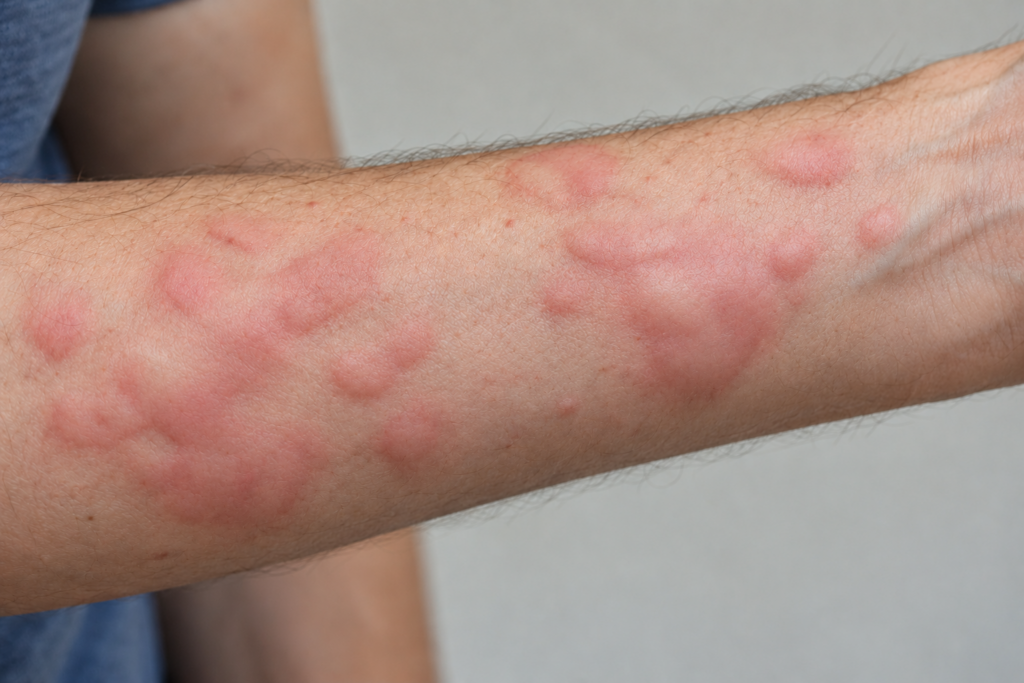
Hives are classified by duration. Acute hives last less than six weeks and are the most common type. They are usually triggered by a specific cause, such as an allergic reaction, an illness, or a medication. Chronic hives last longer than six weeks and can persist for months or even years. In many cases of chronic hives, no specific trigger is ever identified, which can be frustrating for patients looking for a clear explanation.
What Causes Hives?

The list of potential hives triggers is long, which is part of why they can be difficult to pin down. Common causes of acute hives include foods such as shellfish, nuts, eggs, and dairy, medications like antibiotics, aspirin, and ibuprofen, insect stings and bites, infections including viral illnesses and strep throat, and direct contact with allergens like latex or pet dander.
Physical triggers can also cause hives. Pressure on the skin from tight clothing, exposure to cold air or cold water, heat and sweating, sun exposure, and even vibration can trigger hives in susceptible individuals. These are called physical urticarias, and they are more common than most people realize.
Stress is another significant trigger. Emotional stress does not directly cause hives, but it can lower the threshold at which the body reacts to other triggers, making outbreaks more likely and more severe during periods of high stress.
For patients with chronic hives, the cause often remains unknown. In some cases, chronic hives are linked to an autoimmune process in which the body’s own immune system activates the cells that release histamine without any external trigger. This is not a sign of a serious underlying disease, but it does mean that long-term management is usually necessary.
How Dermatologists Diagnose and Treat Hives
When a patient comes in with hives, the first step is a thorough history. A dermatologist will ask about the timing of the outbreaks, what you were eating, what medications you take, whether you have been sick recently, and whether there are any patterns related to physical activity, temperature, or stress. In some cases, blood tests may be ordered to check for underlying conditions such as thyroid disease, which is associated with chronic hives in some patients.

Treatment for acute hives is usually straightforward. Non-sedating antihistamines like cetirizine or loratadine are the first line of treatment, and they are effective for most patients. For more severe episodes, a short course of oral corticosteroids may be prescribed to bring the reaction under control quickly.
Chronic hives require a more layered approach. Patients may need higher doses of antihistamines than what is available over the counter, and in some cases, additional medications are added to block histamine through a different pathway. For patients with chronic hives that do not respond to antihistamines, biologic medications that target the underlying immune response have become an increasingly effective option.
Identifying and avoiding triggers, where possible, is always part of the plan. Keeping a symptom diary that tracks food, activity, stress levels, and environmental exposures can help reveal patterns that are not immediately obvious. A contact dermatitis evaluation may also be recommended if there is suspicion that a specific allergen is contributing to the problem.
When Hives Are a Medical Emergency
Most hives are uncomfortable but not dangerous. However, hives can sometimes be part of a severe allergic reaction called anaphylaxis. If hives are accompanied by swelling of the lips, tongue, or throat, difficulty breathing, dizziness or a rapid heartbeat, or a feeling of tightness in the chest, seek emergency medical attention immediately. Anaphylaxis is a medical emergency that requires epinephrine and immediate care.
When to See a Dermatologist About Hives
A single, brief episode of hives that clears with an over-the-counter antihistamine and does not return usually does not need further evaluation. But if hives keep coming back, last longer than a few days, are not responding to antihistamines, or are accompanied by pain, bruising, or other unusual symptoms, it is time to see a dermatologist. Chronic and recurrent hives are a core area of medical dermatology, and a dermatologist can develop a treatment plan that goes beyond what you can manage on your own.
Schedule an Appointment in Cleveland
Chattanooga Skin and Cancer Clinic has been providing expert dermatology care across the Tennessee Valley since 1973. If hives or unexplained skin reactions are disrupting your daily life, our board-certified dermatologists at the Cleveland office can help you identify the cause and build a treatment plan that works.
Cleveland Office
3891 Adkisson Drive, Cleveland, TN 37312
Phone: 423-479-8648
Hours: Monday through Friday, 7:30 AM to 4:30 PM (EST)
Follow us! @chattskinandcancer