
A full-body skin cancer screening is one of the most straightforward steps you can take to protect your health. A board-certified dermatologist checks your skin from head to toe, looking for moles, spots, or lesions that may need attention. The exam is quick, painless, and in many cases, it saves lives. Yet most people do not know how often they should go, or what the right schedule looks like for their age and risk level.
Skin cancer is the most commonly diagnosed cancer in the United States, with the American Academy of Dermatology estimating that one in five Americans will develop it during their lifetime. Catching it early, while it is still confined to the surface of the skin, makes treatment far simpler and outcomes far better. That is why understanding the right screening schedule matters as much as the screening itself.
What Does a Full-Body Skin Cancer Screening Actually Involve?
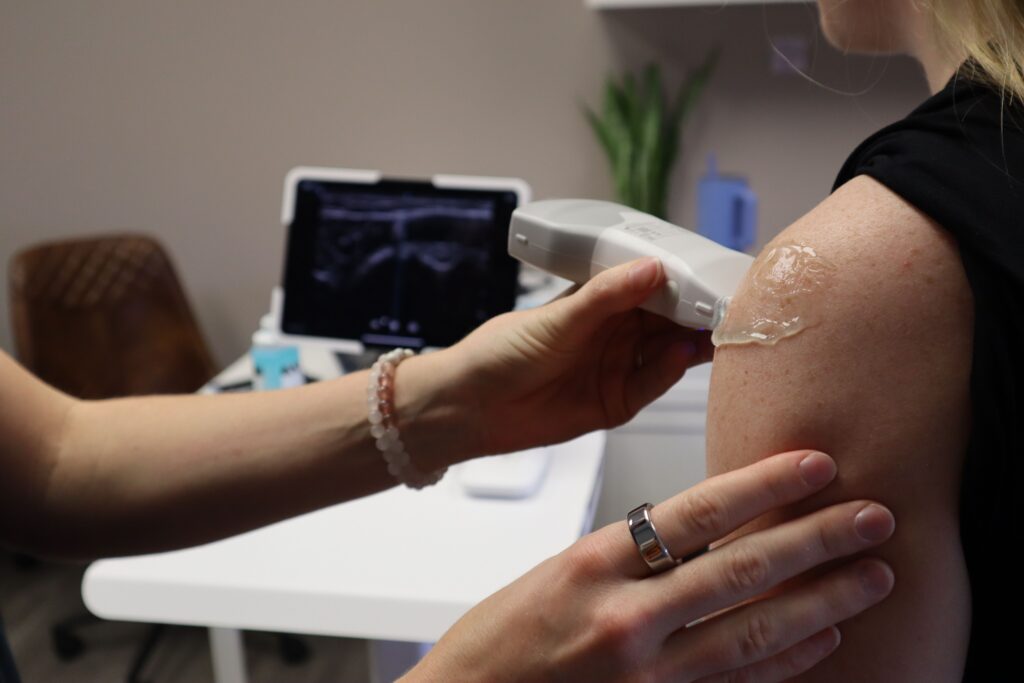
A full-body skin cancer screening is a head-to-toe visual exam performed by a dermatologist. The doctor examines every area of your skin, including spots you cannot easily see yourself, such as your scalp, between your toes, behind your ears, and on your back. The appointment typically takes about 15 to 30 minutes.
During the exam, your dermatologist looks for anything unusual. That includes asymmetrical moles, spots with irregular borders, lesions that have changed in color or size, and any growth that is bleeding, itching, or not healing. If something looks suspicious, the doctor may perform a biopsy, removing a small sample of skin tissue to test in a lab.
Many patients are surprised by how comfortable and routine the exam feels. You undress and wear a medical gown while the dermatologist works methodically through each area of your body. There is no pain and no special preparation required beforehand.
How Often Should You Get Screened Based on Your Age?
Screening frequency depends on your age, skin type, personal history, and risk factors. What makes sense for a 25-year-old with no family history of skin cancer looks different from what a 55-year-old with a history of sunburns needs. Here is a practical breakdown by age group.
Should Younger Adults in Their 20s and 30s Get Screened?
Yes, and sooner than most people expect. Skin cancer does not only affect older adults. Melanoma is one of the most common cancers diagnosed in people between 25 and 29. Tanning beds, childhood sunburns, and fair skin all increase risk at any age.
For adults in their 20s and 30s with no personal or family history of skin cancer and no unusual moles or lesions, a baseline skin exam with a dermatologist is a smart starting point. From there, annual or biennial screenings are appropriate. For those with fair skin, a history of tanning bed use, or a family member who has had melanoma, annual screenings starting in the mid-20s make sense.
What Is the Right Screening Schedule for Adults in Their 40s?
Adults in their 40s should be getting annual full-body screenings. Cumulative sun exposure adds up over the years, and the risk of skin cancer rises with age. Many people who developed damaging sun habits in their teens and 20s begin to see the long-term effects during this decade.
This is also a good time to establish a relationship with a dermatologist if you do not already have one. An annual visit allows your doctor to track any moles or spots year over year, making it much easier to catch changes early. Chattanooga Skin and Cancer Clinic has been serving patients in the greater Chattanooga region since 1973, and building that kind of long-term patient relationship is exactly what routine screening makes possible.
How Often Should Adults Over 50 Be Screened for Skin Cancer?
Adults over 50 should see a dermatologist for a full-body screening every year without exception. The incidence of basal cell carcinoma, squamous cell carcinoma, and melanoma all increase with age. Men over 50 are at particularly high risk and are statistically less likely to notice or report skin changes on their own.
If you have previously been diagnosed with any form of skin cancer, your dermatologist will likely recommend screenings every six months. Patients who have had melanoma removed are at elevated risk of recurrence and benefit from closer monitoring. The same is true for patients who are immunocompromised or who have a significant history of outdoor sun exposure over the course of their lives.
Do Children and Teenagers Need Full-Body Skin Exams?
Children and teenagers do not typically need annual full-body screenings in the same way adults do, but that does not mean skin health should be ignored. Parents should examine their children’s skin regularly for any new or changing moles and should bring concerns to a dermatologist promptly.
For teens with a history of blistering sunburns, use of tanning beds, or a family history of melanoma, a visit to a dermatologist is warranted. Sun protection habits developed in childhood affect lifetime skin cancer risk, and establishing early awareness gives younger patients a head start.
What Factors Increase How Often You Should Get Screened?
Age is just one piece of the picture. Several risk factors point to a more frequent screening schedule, regardless of how old you are.
Fair skin, light eyes, and light or red hair all reduce the skin’s ability to protect itself from ultraviolet radiation. People with these characteristics burn more easily and accumulate sun damage faster. A history of severe or frequent sunburns, especially blistering burns in childhood, is one of the clearest indicators of elevated melanoma risk.
A personal or family history of skin cancer is another major factor. If a parent or sibling has been diagnosed with melanoma, your own risk increases. People with more than 50 moles on their body, or with atypical moles that look irregular in shape or color, also fall into a higher-risk category and should discuss a more aggressive screening schedule with their dermatologist.
Occupational or recreational sun exposure matters too. Farmers, construction workers, roofers, landscapers, and anyone who spends significant time outdoors accumulates UV exposure at a much higher rate than the average office worker. The same applies to avid golfers, hikers, and people who spend a lot of time on or near the water.
What Are the Early Warning Signs to Watch for Between Screenings?

Annual screenings are not a substitute for paying attention to your own skin throughout the year. Dermatologists recommend performing a self-exam monthly, checking for any new spots or changes in existing ones.
The ABCDE rule is the most widely used framework for recognizing suspicious moles. A stands for asymmetry, meaning one half of the mole looks different from the other. B stands for border, noting irregular, ragged, or blurry edges. C stands for color, flagging multiple shades of brown, black, red, white, or blue within a single mole. D stands for diameter, with any lesion larger than a pencil eraser (about 6 millimeters) warranting attention. E stands for evolving, meaning any mole that changes in size, shape, or color, or begins to bleed or itch, should be evaluated promptly.
Do not wait for your next scheduled screening if something looks off. A mole that changes quickly or a spot that does not heal after a few weeks should prompt a call to your dermatologist right away. Catching an issue between screenings is just as important as catching it during one.
Why Does Regular Screening Make Such a Difference in Outcomes?
The survival statistics for melanoma tell the story clearly. When melanoma is detected while it is still localized to the skin, the five-year survival rate is approximately 99 percent. Once it has spread to nearby lymph nodes, that rate drops to around 68 percent. When it has spread to distant organs, the rate falls to approximately 30 percent.
Those numbers are not meant to be alarming. They show that early detection genuinely changes outcomes. A dermatologist can spot a melanoma at a stage when it is still easily treatable, long before it would show obvious symptoms that might prompt most people to seek care on their own.
The same is true for basal cell carcinoma and squamous cell carcinoma, the two most common types of skin cancer. Neither spreads as aggressively as melanoma, but both can become more difficult to treat if left unchecked. Early detection keeps treatment options straightforward and minimally invasive.
How Does Mohs Surgery Factor in After a Skin Cancer Diagnosis?
If a screening uncovers a skin cancer, treatment options vary depending on the type, location, and size of the growth. For many cases of basal cell carcinoma and squamous cell carcinoma located on areas like the face, ears, scalp, or neck, Mohs micrographic surgery is the preferred treatment.
Mohs surgery removes cancerous tissue one thin layer at a time. After each layer is removed, it is immediately examined under a microscope. The process continues until no cancerous cells remain. This precision approach results in the highest cure rates for those specific cancer types while preserving as much healthy tissue as possible.
Chattanooga Skin and Cancer Clinic offers Mohs surgery at both its Chattanooga and Cleveland locations. Having access to this level of specialized care locally means patients do not need to travel far from home to receive treatment from an experienced, board-certified dermatologist.
What Should You Expect at Your First Full-Body Skin Exam?

If you have never had a full-body skin exam before, knowing what to expect makes the appointment far less intimidating. When you arrive, you will be asked about your personal and family medical history, any medications you are taking, and any spots or moles you are concerned about.
You will change into a medical gown and the dermatologist will examine your skin systematically. Areas you cannot see yourself are checked carefully. The whole exam moves quickly. If anything looks unusual, your doctor will explain what they found and discuss next steps, which may include a biopsy or simply a follow-up appointment to monitor the area.
Come prepared to mention any spots that have concerned you, even if you are not sure they are significant. Your dermatologist sees hundreds of patients and can quickly assess whether something needs closer attention. There is no such thing as a question too small when it comes to your skin health.
Frequently Asked Questions About Skin Cancer Screenings
At what age should you start getting annual skin cancer screenings?
Most dermatologists recommend starting annual screenings by age 40. People with risk factors such as fair skin, a history of sunburns, regular outdoor exposure, or a family history of melanoma should start earlier, often in their mid-20s to early 30s. A baseline exam at any age is a smart starting point.
Can a primary care doctor perform a skin cancer screening?
A primary care doctor can perform a basic skin check, but a board-certified dermatologist has specialized training in recognizing the full range of skin conditions, including early-stage cancers that may look unremarkable to the untrained eye. For a thorough full-body screening, seeing a dermatologist is the more reliable choice.
Does health insurance cover full-body skin cancer screenings?
Coverage varies by plan. Many insurance plans cover screenings when they are medically indicated, particularly for patients with elevated risk. Check with your insurer before your appointment, and ask the dermatology office about what to expect. Chattanooga Skin and Cancer Clinic works with patients across a range of insurance situations.
How long does a full-body skin cancer screening take?
A routine full-body screening typically takes between 15 and 30 minutes. If you have multiple areas of concern or if a biopsy is needed, the appointment may run a bit longer. The exam itself is straightforward and does not require any special preparation.
What is the difference between a skin cancer screening and a mole check?
A mole check focuses specifically on existing moles a patient is concerned about. A full-body skin cancer screening is a complete head-to-toe exam of all exposed and unexposed skin. The full screening is broader and more thorough, covering areas you may not have thought to look at yourself.
What happens if a suspicious spot is found during a screening?
The dermatologist will explain what they observed and discuss options. In many cases, a small biopsy is performed during the same visit. The sample is sent to a lab for analysis, and results typically come back within a week to ten days. If the biopsy confirms cancer, your dermatologist will walk you through treatment options based on the type, size, and location of the growth.
Taking the First Step Toward Protecting Your Skin
Skin cancer screening is not something to put off. The exam is quick, painless, and gives you real information about your skin health. For most adults, once a year is the right frequency. For those with elevated risk factors, a more frequent schedule makes sense, and your dermatologist can help you figure out exactly what that looks like.
Chattanooga Skin and Cancer Clinic has been providing medical dermatology care to patients across the Chattanooga, Cleveland, and Kimball areas since 1973. All providers are board-certified dermatologists with experience in skin cancer detection and treatment, including Mohs surgery for appropriate cases. Appointments are available Monday through Friday at all three locations.
To schedule a full-body skin cancer screening, contact the location most convenient for you. The Chattanooga office can be reached at 423-899-2700, the Cleveland office at 423-479-8648, and the Kimball office at 423-815-9975. You can also learn more at chattskinandcancer.com.