
Is That Spot on Your Skin Normal? 6 Warning Signs You Shouldn’t Ignore
You notice something on your arm that wasn’t there before. It’s small, maybe slightly raised, and it looks a little different from the freckles you’ve had for years. You tell yourself it’s probably nothing. A few weeks pass, and it’s still there, maybe a touch bigger. That moment of uncertainty is exactly when a dermatologist visit makes a real difference. Skin changes are easy to brush off, but knowing which ones deserve a closer look can protect your health in a meaningful way.
Skin cancer is the most commonly diagnosed cancer in the United States. The American Cancer Society estimates that over 100,000 new cases of melanoma alone are diagnosed each year. The good news is that most skin cancers, when caught early, are highly treatable. The tricky part is knowing what to watch for. Not every spot or mark is cause for alarm, but certain changes to your skin are clear signals to get checked by a board-certified dermatologist. Here are six warning signs that should never be ignored.
Is a Spot Changing in Size, Shape, or Color?
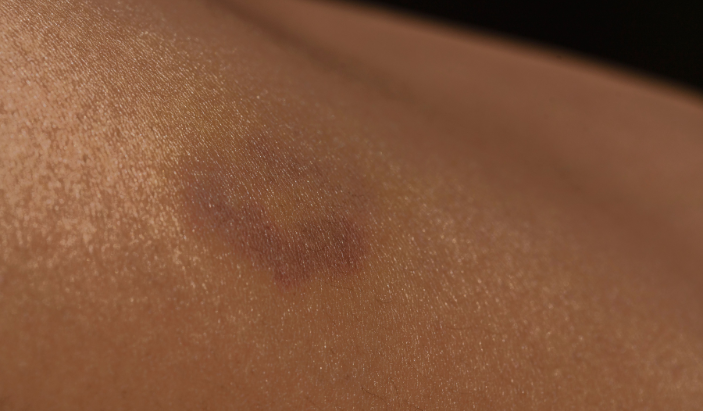
Change is the single most important word in skin cancer detection. A mole or spot that has looked the same for years and suddenly starts to shift is worth taking seriously. Board-certified dermatologists use the ABCDE rule to evaluate these changes. A stands for Asymmetry, meaning one half of a spot doesn’t match the other. B is for Border irregularity, where edges appear ragged, notched, or blurred. C covers Color variation, where a single spot contains multiple shades of brown, black, red, or white. D refers to Diameter, specifically any growth larger than six millimeters, roughly the size of a pencil eraser. E is for Evolution, the catch-all for any noticeable change over time.
Any spot that checks more than one of those boxes warrants a professional skin exam. At Chattanooga Skin and Cancer Clinic, full-body skin checks are part of routine care, and the team has experience identifying changes that patients commonly overlook on their own.
Does the Spot Bleed Without Any Obvious Cause?
Spontaneous bleeding from a mole, lesion, or skin growth is a symptom that demands prompt attention. Healthy skin does not bleed on its own. If you notice a spot that bleeds after minimal contact, such as light rubbing from clothing or gentle washing, that behavior is abnormal and should be evaluated quickly.
Basal cell carcinoma, one of the most common forms of skin cancer, can appear as a pearly or flesh-colored bump that bleeds easily when bumped or scratched. Squamous cell carcinoma sometimes presents similarly. Neither type is automatically dangerous when caught early, but both require professional diagnosis and treatment. Waiting on a bleeding spot is a risk not worth taking.
Is There a Sore That Won’t Heal?
A cut or scrape that doesn’t heal within two to four weeks is a red flag. Most minor skin wounds close up fairly quickly under normal circumstances. When a sore persists, reopens, or crusts over repeatedly without actually healing, that pattern can point to an underlying issue, including early skin cancer.
Basal cell carcinomas sometimes look like open sores that appear to heal and then return. They can also resemble a flat, scar-like lesion with a pale or slightly yellow tint. If you have a wound that has lingered for more than a month without clear improvement, a dermatology appointment is the right next step.
Has a Mole Started to Look Different from the Others?
Dermatologists sometimes refer to this as the “ugly duckling” sign. Most people have moles that share a general family resemblance in terms of size, shape, and color. A mole that stands out as visibly different from the rest deserves attention. It doesn’t need to look dramatic to be suspicious. Sometimes the difference is subtle: a single mole that is darker, larger, or more irregular than everything else on your skin.
This is one reason annual skin checks with a board-certified dermatologist are so useful. A trained eye can scan your full body and identify outliers that you simply cannot see yourself, especially on your back, scalp, and behind the ears. These are areas where many skin cancers develop precisely because they go unnoticed.
Do You Notice a Pink, Pearly, or Waxy Growth?
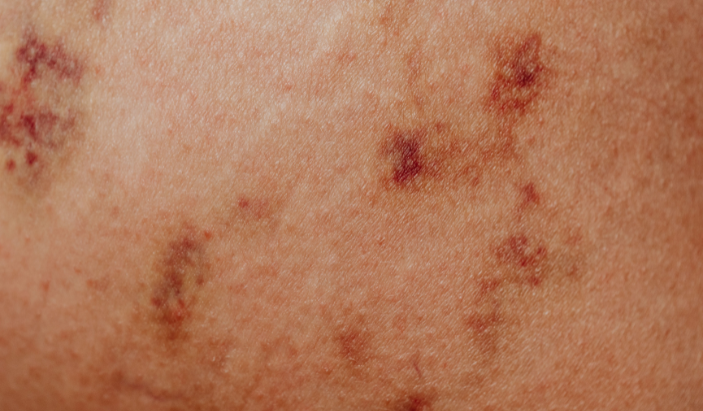
Not all skin cancers look like dark, irregular moles. Basal cell carcinoma, the most common type, often presents as a small, shiny bump with a pink or translucent quality, sometimes with visible blood vessels near the surface. It can also appear as a flat, brownish scar-like patch. These subtle presentations are easy to dismiss as a harmless skin tag or minor blemish.
Squamous cell carcinoma can show up as a rough, scaly patch of red skin, a firm bump, or a raised growth with a depressed center. Both cancers are highly treatable with early intervention. Mohs micrographic surgery, available at Chattanooga Skin and Cancer Clinic’s Chattanooga and Cleveland locations, is the most precise treatment option for these cancers and delivers cure rates above 99 percent for appropriate candidates.
Is There Persistent Itching, Tenderness, or Unusual Sensation in a Spot?
Skin spots that itch, burn, or feel tender without an obvious cause are worth noting. Occasional itchiness from dry skin is completely normal. A specific spot that consistently draws your attention because of sensation, especially combined with any visible change, is a different matter.
Melanoma, the most serious form of skin cancer, can sometimes cause itching or tenderness in an affected mole. These sensations don’t always accompany skin cancer, but when they pair with other warning signs, they strengthen the case for getting a professional evaluation.
When Should You Schedule a Skin Cancer Screening?

If you spot any of the six warning signs above, schedule an appointment with a dermatologist as soon as possible. You don’t need to wait until your annual checkup if something looks or feels off. Early action consistently leads to better outcomes across every type of skin cancer.
Beyond responding to specific concerns, adults with a family history of skin cancer, a personal history of frequent sun exposure, or a record of sunburns should schedule annual full-body skin checks. People with lighter skin tones or a high number of moles carry a higher baseline risk. Southeast Tennessee’s sunny climate means residents in Chattanooga, Cleveland, and Kimball get significant UV exposure throughout the year, which adds up over time.
Chattanooga Skin and Cancer Clinic has served patients across the Tennessee Valley since 1973. All providers are board-certified dermatologists with deep experience in skin cancer detection, diagnosis, and treatment. Three convenient locations across Chattanooga, Cleveland, and Kimball make it straightforward to get the care you need close to home.
Frequently Asked Questions
How do I know if a mole is dangerous?
Use the ABCDE rule as a starting point: Asymmetry, Border irregularity, Color variation, Diameter over six millimeters, and Evolution over time. Any mole that meets one or more of those criteria should be evaluated by a board-certified dermatologist. A professional skin check is the only reliable way to confirm whether a spot is benign or needs further attention.
Can skin cancer appear somewhere other than a mole?
Yes. Skin cancer can develop on any part of the body, including areas with no prior moles. Basal cell and squamous cell carcinomas often appear as growths, patches, or sores that don’t look like traditional moles at all. Some skin cancers develop on the scalp, ears, lips, palms, soles of the feet, and even under the nails.
Is it normal for a mole to itch occasionally?
Occasional mild itching in a mole can happen without any serious cause. Persistent itching, especially combined with visible changes such as growth, color shift, or irregular borders, is a reason to get checked. Itching alone is not a definitive sign of cancer, but it becomes more meaningful when it accompanies other warning signs.
What happens during a full-body skin cancer screening?
A full-body skin check is a head-to-toe visual examination performed by a dermatologist. The provider examines every area of your skin, including the scalp, back, and areas between the toes. The appointment takes about 15 to 30 minutes. If the dermatologist finds anything suspicious, they may perform a biopsy that same visit or schedule a follow-up. The exam is painless and doesn’t require any special preparation beyond removing clothing.
How often should I see a dermatologist for skin cancer screening?
Most adults benefit from an annual full-body skin check. People with a personal or family history of skin cancer, a high number of moles, or significant past sun exposure should discuss a more frequent schedule with their dermatologist. The right frequency depends on your individual risk profile.
What is Mohs surgery and who is it for?
Mohs micrographic surgery is a precise, layer-by-layer technique for removing basal cell and squamous cell carcinomas. It preserves the maximum amount of healthy tissue while achieving the highest cure rates available for these cancers. Mohs is particularly effective for tumors on the face, ears, hands, or feet where tissue conservation matters. The procedure is performed in a single visit. Chattanooga Skin and Cancer Clinic offers Mohs surgery at both the Chattanooga and Cleveland locations.
Ready to Get Your Skin Checked?
Catching something early is the most effective thing you can do for your skin health. If you’ve noticed any of the warning signs above, or if it’s simply been a while since your last professional skin exam, the team at Chattanooga Skin and Cancer Clinic is ready to help.
Appointments are available at three locations across Southeast Tennessee:
Chattanooga: 6061 Shallowford Road, Chattanooga, TN 37421 | 423-899-2700
Cleveland: 3891 Adkisson Drive, Cleveland, TN 37312 | 423-479-8648
Kimball: 400 Dixie Lee Center Rd Ste. C, Kimball, TN 37347 | 423-815-9975
All three offices are open Monday through Friday. Visit chattskinandcancer.com to request an appointment online.