

You have tried every dandruff shampoo on the shelf. The flaking stops for a few days, maybe a week, and then it comes back. Your scalp itches. There are red, scaly patches along your hairline or around your nose. You have been calling it dandruff, but it is starting to feel like something more, and no over-the-counter product is solving it.
What you may be dealing with is seborrheic dermatitis, one of the most common skin conditions dermatologists treat and one that tends to get noticeably worse in the fall. It is not just a cosmetic nuisance. Seborrheic dermatitis is a chronic inflammatory condition that affects oily areas of the body, and for the millions of adults who have it, fall and winter are typically the most frustrating seasons.
What Is Seborrheic Dermatitis?
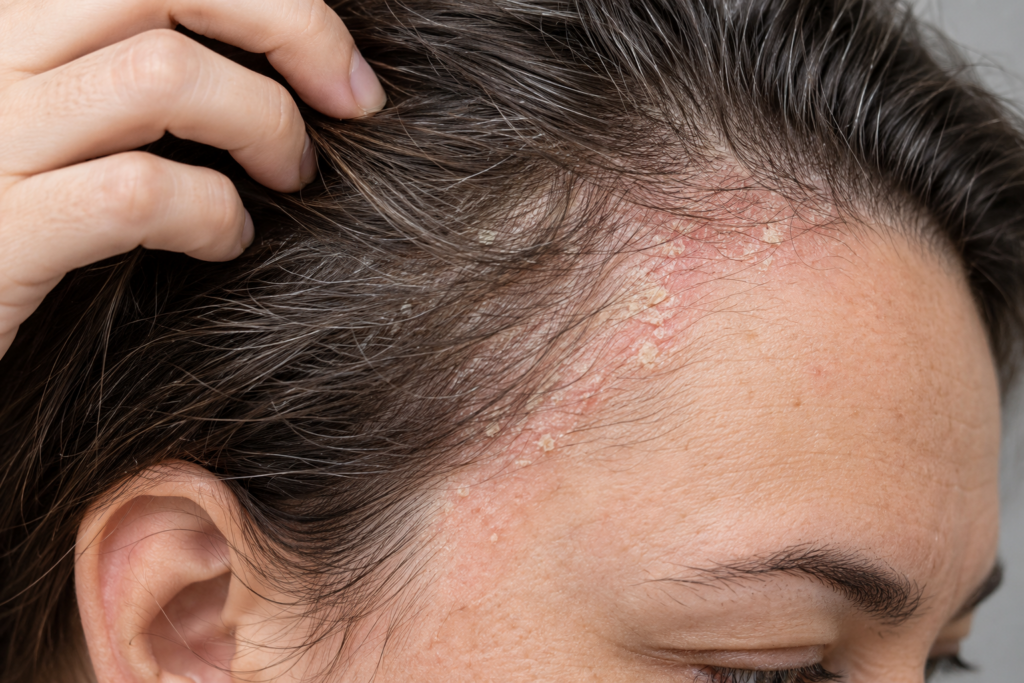
Seborrheic dermatitis is a common skin condition that causes red, flaky, greasy-looking patches on areas of the body where oil glands are most active. The scalp is the most common location, which is why severe cases are often mistaken for persistent dandruff. But it can also appear on the face, particularly around the eyebrows, the sides of the nose, and behind the ears. Some patients develop it on the chest, upper back, and in skin folds.
The condition is driven by an overgrowth of a yeast called Malassezia that naturally lives on the skin. Everyone has this yeast, but in people with seborrheic dermatitis, the immune system reacts to it in a way that triggers inflammation, flaking, and redness. It is not contagious, and it is not caused by poor hygiene. It is a chronic condition with periods of flaring and remission, and it tends to run in cycles that correspond with seasonal and environmental changes.
Seborrheic dermatitis can affect anyone, but it is most common in three groups: infants, where it is known as cradle cap, adults between the ages of 30 and 60, and individuals with compromised immune systems or neurological conditions like Parkinson’s disease.
Why Seborrheic Dermatitis Gets Worse in Fall
Fall brings a combination of environmental shifts that are particularly aggravating for seborrheic dermatitis. The drop in humidity dries out the skin’s surface, which might seem like it would reduce oiliness, but the opposite often happens. When the skin barrier becomes dry and compromised, the oil glands can actually ramp up production to compensate. That excess oil feeds the Malassezia yeast, and the cycle of inflammation and flaking intensifies.
Indoor heating contributes to the same problem. Dry air from furnaces and space heaters strips moisture from the skin while creating a warm, low-humidity environment where yeast can thrive. The combination of oily skin in a dry environment is exactly the condition seborrheic dermatitis needs to flare.
Reduced sun exposure also plays a role. Ultraviolet light has a natural anti-inflammatory and antifungal effect on the skin. During the summer, casual sun exposure helps keep Malassezia populations in check. As daylight hours shrink and people spend more time indoors, that natural control diminishes.
Stress, which tends to peak during the fall and early winter, is another well-documented trigger. The connection between stress and seborrheic dermatitis is strong enough that dermatologists routinely ask about life stressors when evaluating patients with worsening symptoms.
Seborrheic Dermatitis vs. Dandruff vs. Psoriasis
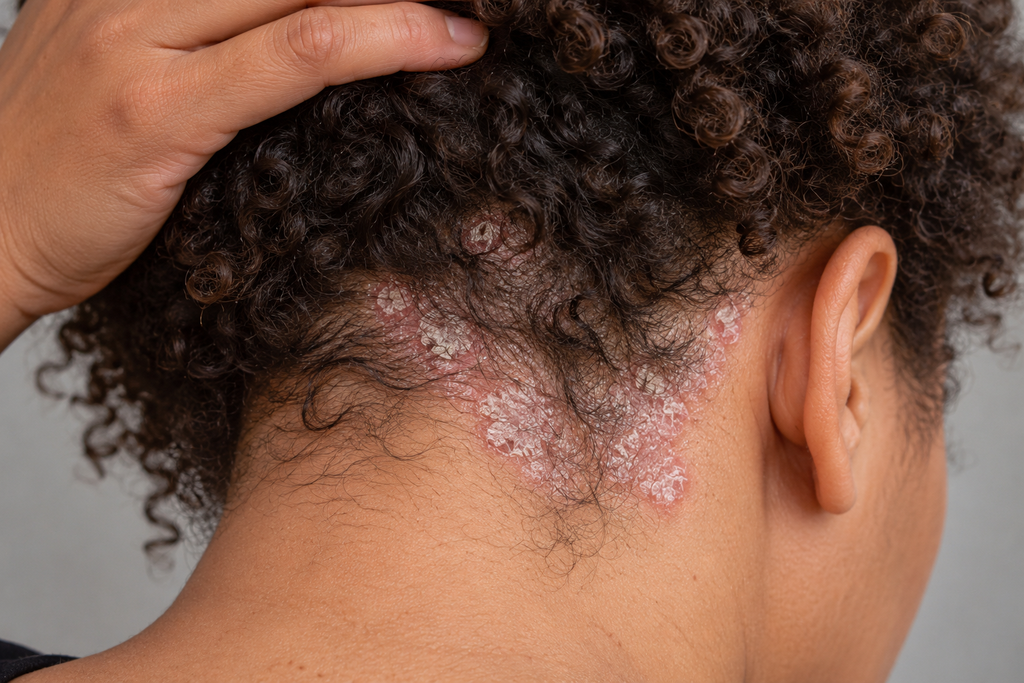
One of the reasons seborrheic dermatitis goes untreated for so long is that patients assume they just have stubborn dandruff. Dandruff and seborrheic dermatitis are actually on the same spectrum. Dandruff is a milder form of the same condition, limited to the scalp and characterized by white or yellowish flakes without significant redness or inflammation. Seborrheic dermatitis is the more severe version, involving visible redness, thicker scale, and often extending beyond the scalp.
It is also commonly confused with psoriasis. Both conditions cause scaly patches, and they can even overlap in a condition called sebopsoriasis. However, psoriasis plaques tend to be thicker, more silvery-white, and more sharply defined, while seborrheic dermatitis patches are greasier, yellowish, and tend to follow the oily zones of the face and scalp. A dermatologist can distinguish between the two with a clinical examination and, if necessary, a skin biopsy.
How Dermatologists Treat Seborrheic Dermatitis

Treatment for seborrheic dermatitis depends on the severity and the areas affected. For mild scalp involvement, medicated shampoos containing ketoconazole, selenium sulfide, zinc pyrithione, or salicylic acid are often the first line of treatment. These work by reducing yeast populations and breaking down scale. Unlike over-the-counter dandruff shampoos, prescription-strength formulations deliver higher concentrations of active ingredients and are used on a specific schedule, often alternating with gentle maintenance shampoos.
For facial and body involvement, topical antifungal creams and low-potency topical corticosteroids are commonly prescribed. The goal is to reduce inflammation quickly without thinning the skin, which can happen with prolonged steroid use on delicate areas like the face. Topical calcineurin inhibitors are a steroid-free alternative that dermatologists use for long-term maintenance, particularly around the eyes and nose.
In more stubborn cases, oral antifungal medications may be prescribed for a short course to get symptoms under control. Patients with eczema or other inflammatory skin conditions may require a layered treatment approach that addresses multiple conditions simultaneously.
The most important thing to understand about seborrheic dermatitis is that it is a manageable condition, but it rarely goes away permanently on its own. Ongoing treatment and flare prevention are the keys to keeping it under control.
When to See a Dermatologist
If you have been cycling through drugstore dandruff shampoos without lasting improvement, if the flaking has spread beyond your scalp to your face or body, or if the affected areas are red, itchy, and uncomfortable, it is time to see a dermatologist. Persistent seborrheic dermatitis that does not respond to over-the-counter products is one of the most common and most treatable conditions in medical dermatology, and a proper diagnosis is the first step toward getting it under control.
Schedule an Appointment in Chattanooga
Chattanooga Skin and Cancer Clinic has been treating skin conditions across the Tennessee Valley since 1973. If stubborn dandruff, scalp flaking, or facial redness is affecting your comfort or confidence, our board-certified dermatologists can diagnose the cause and build a treatment plan that works.
Chattanooga Office
6061 Shallowford Road, Chattanooga, TN 37421
Phone: 423-899-2700
Hours: Monday through Friday, 7:30 AM to 4:30 PM (EST)
Follow us! @chattskinandcancer